
Episode 1 - Basics of the Psyche Part 1
Basics of the Psyche Part 1 presents foundational principles of the psyche as theorized by Carl Jung, alongside channeled information from The Law of One Material. Through the use of examples and comparative analysis, it demonstrates how different cultures may describe the same concepts using distinct labels and terminology. Trish examines how alignment and misalignment may manifest in the world and provides internal prompts to support the appropriate use of catalyst.
Next Episode: Basics of the Psyche Part 2: Finding the Boundary Between Conscious and Subconscious
WEBVTT
Welcome, everyone. Today, we're going to explore a bridge between two very
different but surprisingly compatible systems.
So we're going to look at Carl Jung's depth psychology and also the Law of
One.
On the surface, they may seem like different worlds, but Jung is working from
psychology, dreams, and symbols, and trauma, and the unconscious.
Law of One is working from metaphysics, consciousness, evolution, polarity,
catalyst, and unity. They begin to
start looking like two maps of the same territory.
A good way to picture is to imagine standing in front of two
different maps. One map
shows the interior of a house, the rooms, the hidden closets, the basement,
the attic, and the central foundation.
That's Jung's model of the psyche.
The other map shows the larger landscape around the house, the woods,
the weather, direction of travel, and the destination.
That is the Law of One model.
One explains what's happening on the inside of the person, and the other one
explains how experience itself becomes part of spiritual
development.
So I want you to listen for one central idea.
Fragmentation creates distortion, and integration moves
consciousness back towards unity.
In everyday language, that means that the parts of ourselves that we reject,
avoid, hide, or misunderstand do not disappear.
They actually shape how we see the world.
They shape how we react to other people. They shape the choices that we make.
So both Carl Jung and the Law of One are concerned about how these
fragments are recognized, balanced, and then eventually integrated.
So before the end of this, so the goal is not to just understand a
list of terms. The goal is to be able to visualize consciousness as a
developmental process. So we're going to look at the ego, the
persona, shadow, complexes, archetypes,
and what the self is in Jung's model.
And then we're going to look into the Law of One and kind of connect them to
those concepts of density progression, polarity, catalyst,
distortion, and the higher self.
So the larger theme is that individuation and spiritual evolution may be different
languages for the same movement, the movement from separation
back into wholeness.
So with that in mind, let's move on from the title slide here into the
roadmap for how these two systems are going to be compared.
So
we're going to go into the overview.
So
this gives us a basic framework. So Jung gives us a psychological
architecture, as the ego is the center of conscious identity.
The shadow is the rejected material.
The persona is the social mask. Complexes
are emotionally charged clusters.
And then archetypes are universal patterns.
The self is the organizing center of wholeness.
The Law of One is going to give us a metaphysical architecture.
So they describe densities as stages of consciousness.
Polarity is evolutionary direction.
Catalyst as growth triggering experience.
Distortion as separation from unity.
And the higher self as the future integrated self-guiding
development.
So let's look at
an argument between two people. Jung would ask,
what unconscious material is being activated?
Is this person reacting from an ego defense, a shadow projection, or an old
complex? And then the Law of One asks what catalyst is being offered
here.
Is the person interpreting the situation through love or control, fear,
compassion, separation?
They're not competing interpretations. They're two levels of the same event, right?
So this is why individuation and density progression can be understood as parallel
processes. Individuation is Carl Jung's term for becoming whole
by integrating unconscious material.
Density progression is the Law of One's term for consciousness
evolving toward unity
by balancing distortions. In both of these, development
does not happen by avoiding conflict.
It happens by learning how to use conflict, discomfort, projection, and
emotional activation as material for growth.
So now that we kind of have that overview,
we're going to move on to asking why do they align so
closely
despite coming from different directions or different traditions?
So why these two systems align?
The reason that they align is
they're describing development
from two different angles, right?
So we have Jung, psychological evolution,
asking how does a person become whole?
What happens when the forgotten pain, hidden fear, rejected parts of the
personality begin to influence behavior?
Law of One, on the other hand, describing metaphysical evolution, as I
said. So that is asking, how does consciousness learn through
experience? How does each situation become an opportunity
either to move toward unity or to go deeper into separation?
So
someone receives criticism at work.
So it may imply that Jung explains internal perception and
Law of One explains external catalyst, but in real life, it looks very
specific. So internally,
that criticism might activate an old complex, and maybe that person has a history
of feeling unseen or judged or not good enough, right?
And then Jung would say that the present moment is being filtered
through unconscious material.
The person may not be responding only to the coworker's words.
They may also be responding to years of stored emotional meaning.
Law of One would describe that the same thing as catalyst.
The event itself is neutral. What matters is how we
interpret that and use it.
The event itself is neutral. What matters is how it's interpreted and
used. One person might receive the criticism, feel
defensive, and then attack back. Another might pause, recognize the
discomfort, and then ask whether there is something useful to learn.
A third person might suppress the feeling entirely
and then pretend it doesn't matter.
The external event is the same, but the inner response determines
whether the catalyst is going to create a greater distortion or a greater
integration.
So this is where
fragmentation and distortion become a shared language between these two.
So Jung would say psyche becomes fragmented when the parts of the self are
pushed into the unconscious. Law 1 would say that
consciousness becomes distorted when it experience itself as
separate from unity.
And both of these,
it doesn't happen by denying the fragment.
Healing happens
by bringing it back into the relationship with the whole.
If a person keeps projecting insecurity onto others, the same pattern it will
repeat. If catalyst is not fully processed, Law
1 says it repeats.
They're both describing the same cycle of learning.
So
let's look at an example of
a cracked mirror.
Jung's model
helps us understand the cracks inside the mirror, the shadow, the complex, the
persona, the ego defense.
The Law 1 helps us understand why life keeps putting that mirror in
front of us through relationships and conflicts, loss,
choice, emotional activation.
The mirror is not there to punish us.
It is there to show us what is fragmented
so then it can be integrated.
So when this slide says both systems describe a return to unity as a
final development stage, the important point is Jung's
individuation and the Law 1's density progression, or the
description of,
are not abstract theories. They describe what happens in ordinary life
every time a person chooses awareness over reaction, compassion over projection,
honesty over persona, or integration over
avoidance. The path back to unity begins
in the very small moments of perception.
So
we're going to look into Jung's model of the psyche.
So we're going to look at Jung's model right now, and we're going to start with the
basics.
Jung doesn't describe the mind as one simple unified thing.
He describes it as a layered structure.
So on the surface, we have a conscious ego.
The part of us that says, "I," that makes decisions, tells our life story,
and then tries to keep a whole stable sense of identity.
So beneath that is the personal unconscious, which contains the forgotten
memories and the wounds and fears, desires,
experiences that we may have pushed away.
Deeper still is the collective unconscious, which Jung
describes as a shared symbolic layer of the human psyche
filled with archetypal patterns.
So imagine a theater. The ego is the actor
standing on the stage under the spotlight.
That is the part that everyone sees, and it is also the part that we
identify most with.
The personal unconscious is backstage, the props and the costumes and
the forgotten scripts,
and any unresolved material that can still influence our performance.
The collective unconscious is even deeper than that.
So it's like the ancient architecture of the theater itself.
So the universal stories, the symbols, patterns
that shape what kind of roles humans tend to play.
For example,
two people might walk into a room where no one says hello.
One person
may barely notice it. Another person may immediately feel rejected or invisible.
Jung would say that the event itself is not the whole story.
The psyche is filtering at that moment.
The ego interrupts what is happening.
As the personal unconscious may add old emotional associations,
and the archetypal patterns may give the experience a symbolic meaning, such
as exile, abandonment, judgment, or belonging.
That is why Jung's specific model is so important for the
rest of this. It shows us that perception is never purely
objective. We do not just see reality.
We see reality through the structure of the psyche.
So once we understand that structure of the psyche, we can go
into the part most people identify with the most, and that is the ego.
There we go.
So
the ego is the part of the psyche that creates continuity.
It's the part that remembers our name, our history, our preferences,
responsibilities, and the story that we tell ourselves about who we are.
Without this, daily life would be a little chaotic.
So we need that ego to organize experience.
But Jung's point is that the ego is not the whole self.
It's more like the narrator of the story,
not the entire library.
So if your ego has ever turned a minor inconvenience
into the season finale of your life, that's pretty normal.
So the ego loves a story.
So
for example, you're driving a car.
The ego is like the driver holding onto the steering wheel, deciding where
to go, checking mirrors, trying to stay in control, but the driver is not the
engine. He's not the road. The driver isn't the weather or the other
cars. So in the same way, the ego tries to direct
consciousness, but it is constantly responding to forces outside of
its control. So unconscious memories, emotional triggers,
the social pressure, bodily sensations, or unexpected life events.
So that's where some of these concepts come together.
According to Law 1, ego distortions are a part of the learning environment.
The ego gives us a separate identity so that choice becomes meaningful.
If we did not experience ourselves as separate, we would not have the same
opportunity to choose compassion, control,
fear, forgiveness, honesty, or manipulation.
So the ego creates the arena where that polarity can form.
So if someone interrupts us during a meeting, the ego might immediately say,
"Oh, they disrespected me."
So and that interpretation may feel true in the moment, but it may also be filtered
through an integrated shadow or an old complex around being ignored.
The catalyst is the interruption.
The ego's interpretation determines whether that catalyst becomes an
opportunity for awareness or another moment of defensiveness.
When the ego is aligned with the self, it can pause and reflect
then. So when the ego is dominated by distortion, it reacts as if
its identity is under attack.
So from the ego, let's go into the social face that the ego
learns to wear, the persona.
All right, so that's the social mask, as I said.
It's the
version of ourselves that we present to the world in order to function in
society. This is not automatically bad.
We need that persona. The way that we act at work, in a
classroom, or family event, or with strangers is usually different from how we
act completely alone.
The persona helps us adapt. It helps us communicate,
cooperate, meet expectations.
An example would be someone who is known as the strong one in their
family. So their persona may be calm, capable,
emotionally controlled. Everyone comes to them for help.
But privately, they're exhausted, afraid, resentful even.
So if they identify too strongly with the persona, they
may begin to believe they're not allowed to need support.
Jung would say individuation often begins when persona
can no longer contain the full truth of the person.
In the Law of One, it says that third density identity itself functions like a
mask.
We incarnate into names, bodies, cultures, roles, professions,
families, belief systems.
These identities are useful, but they're not ultimate.
On the service to others path, the persona gradually
becomes a little more transparent, or much more in some cases, because
authenticity
matters more than the image.
On the service to self path, the persona becomes stronger
and more strategic because image can then be used to control perception.
So
persona is kind of like when we say, "I'm doing great,"
but what we really mean is, "I'm one email
away from becoming a forest hermit."
So the leader, any type of leader on a serving others
path, might admit uncertainty, ask for input, allow others to see
their humanity.
The persona then softens because connection is then more important than
performance.
A leader on a serving the self path might carefully manage every
impression, hide your vulnerabilities, and then using charm or authority
to try to maintain control.
And in each of these, persona is involved, but it's being used in
very different directions.
So a persona collapse can be uncomfortable, but it's necessary
often. It may happen during a career change, relationship
crisis, spiritual awakening, identity transition, or the moment of a
burnout.
So the person realizes that the role that I've been playing is not the whole
truth of who I am. So then that collapse becomes catalyst.
It invites the ego to stop protecting the mask and then begin listening to the
deeper self. But if the persona is the mask that
we show, then the shadow is what the mask often keeps in.
So let's talk about the
shadow a little bit.
So what I would call probably one of Jung's most important concepts, we do need
to understand how to work with this.
So the shadow contains the parts of ourselves that we reject, deny,
repress, or disown.
These may be traits that we were taught were unacceptable, emotions that we learned
to hide, needs that we felt ashamed of, impulses that didn't fit the image that
we wanted to maintain. The important point is that the shadow is not
simply bad, it's unconscious.
It contains underdeveloped strengths too as this painful material.
So this is what we should perceive
as projection. Imagine someone
who has difficulty admitting their own anger.
They may begin to see everyone else as aggressive or rude, hostile, or
even when the situation is neutral.
The anger has not disappeared. It's been pushed into a shadow
and then projected outward.
Jung would say that the person is meeting their own disowned material in the world
around them.
So this goes into a little bit of the Law of One's idea of distortion.
It describes distortion as any movement away from unity.
In Jungian terms, shadow is psychological distortion,
and Law of One distortion is a metaphysical shadow.
Both describe the same problem.
Something has been separated from the whole.
When we reject part of ourselves, we don't become free of it, we
become unconsciously governed by it.
So picture a beach ball like being held underwater.
So as long as the energy is spent forcing it down,
it remains under that pressure. But the moment the attention slips, it bursts right
back to the surface. So a shadow works in the same way.
The more something is denied, the more forcefully it tends to return
through emotional reactions, repeating relationship patterns,
dreams, projection, conflict.
Catalyst repeats until the hidden material is recognized and integrated.
So
just go on a little lighter note. So shadow is like that beach ball, but with like
terrible timing. So it pops up in like traffic, and family gatherings, or right
after
you say, "I'm totally over that."
And there it is.
Once shadow becomes emotionally charged,
then it often organizes itself into what Jung calls complexes.
So concentrated knots of feeling, memory,
and meaning that we can shape how we react before we even realize what's been
activated.
Let's go into
complexes.
So complexes are emotionally charged clusters of memories, ideas, feelings.
A complex is like that sensitive knot in the psyche.
When life touches that knot,
the reaction can feel much larger than the present
situation. This is why someone might
intellectually know that a comment was harmless,
but still feel emotionally overwhelmed, defensive, or even ashamed.
A person with an abandonment complex may
become anxious when a friend takes too long to reply to a message.
The actual event is pretty small,
a delayed text.
But the complex adds emotional history to that.
Suddenly, the person is not only responding to the friend, they
are responding to earlier experiences of being left, ignored,
or unsafe.
The present moment then becomes charged with the past.
So in Law of One language, this is catalyst activating a
distortion. Catalyst does not create the complex out of nowhere.
It reveals what is already there.
The delayed text, a criticism, a disagreement.
The loss becomes a trigger because it contacts an unresolved
emotional structure. That activation is pretty
uncomfortable, but it's also informative.
It shows the individual exactly where healing is needed.
So complexes
are like emotional pop-up ads. You didn't ask for it, they interrupt you
with what you were doing,
and somehow they know exactly how to get your attention.
So
we have a smoke alarm, right? Alarm is loud and it's disruptive, and sometimes
activated by something completely small.
But the purpose is to draw attention to a condition that
needs care.
So complexes,
right? They tell us something is here that is not being integrated.
Healing begins when the person can recognize this reaction is not
only about what just happened, it's also about what this moment is touching inside
of me.
So the complexes show us how a personal experience becomes charged.
Archetypes show us the deeper symbolic patterns underneath those experiences.
Let's look at archetypes a little bit.
And
just FYI, Carl Jung and Law of One both have a set of archetypes.
But when you look at the two and compare them, they often overlap.
And maybe some of them do have the same name, and then some of them are called
something different in each. But when you look at the action or the
description, they are talking about something very similar.
So archetypes are universal patterns that shape the way
human beings experience meaning.
They are not characters in myths, or simply characters in myths.
They are organizing patterns in the psyche.
The hero, mother, trickster, wise old figure, shadow, child,
healer, and ruler. Those are all examples of archetypal patterns that can appear
in dreams, stories, relationships, personal identity.
And those are mostly Carl Jung's names for archetypes.
And we'll get into Law of One's archetypes next.
So if someone goes through
a life transition, they may unconsciously enter a hero pattern,
leaving the familiar world, facing tasks, meeting helpers, confronting fear,
and then returning changed. And that is the typical hero's journey or the fool's
journey, depending on who you talk to. They leave a fool and come back a hero.
We'll say it that way.
Another person may live through the wounded healer archetype,
where their own suffering then becomes a source of compassion and service to
others.
Archetypes give these personal experience a larger structure, symbolic
structure.
The Law of One's archetypal mind describes something similar, as I said, at
the level of consciousness itself.
So if Jung's archetypes are the deeper patterns of the psyche,
the explanation of the archetypal mind is the root structure that shapes how
consciousness learns.
Archetypes guide how we interact with events, relationships, dreams, and
choices,
as they help explain the same life event,
or why the same life event can feel like punishment to one person and then
initiation to another, and then a surface opportunity to a third.
When archetypes are misaligned, perception then becomes distorted.
Someone caught in a victim archetype may interpret every challenge as
proof of helplessness.
Someone inflated by the ruler archetype, again in Jung's terms,
Jung's archetypes, they may interpret cooperation as weakness.
But when the archetypes are balanced, they create clarity.
The hero becomes courage without arrogance.
The healer becomes compassion without self-erasure.
The ruler becomes responsibility without domination.
Archetypal integration gives the psyche symbolic balance.
After looking at those patterns, we can move into
Jung's larger organizing principle of wholeness, which is the self.
So for Jung, that self
is the totality of the psyche and the center of wholeness.
It's not the same as ego.
Ego is the conscious I, while the self is the larger organizing
principle that includes both conscious and unconscious material.
If the ego is the captain on the ship, the self is the full
navigation system, the map, the compass, the stars,
destination,
and the deeper intelligence guiding the whole journey.
A person may experience the self through
dreams and inner images, synchronicities, deep intuition, spiritual
insight, or moments when life seems to kind of
reorganize around a deeper truth.
So someone might be pursuing a career only because it fits their
persona. But repeated burnout, dreams, relationship
conflict, and inner restlessness began pointing them towards a more
authentic path.
Jung would say that the self is guiding the ego towards wholeness.
This is where the
Jung's self and the Law of One higher self really align.
So Law of One
describes the higher self as the sixth density self that guides the incarnated
self through a catalyst and evolution.
The individual is not being pushed randomly through experience.
There is
an organizing intelligence moving the person towards integration.
The ego
resists this because integration feels very disruptive,
but the deeper self is oriented towards unity.
The point
is that development requires the ego to become less defensive and then more
responsive to the self.
So instead of asking,
"How do I protect the identity that I already have?" The person then
begins asking, "What am I being asked to integrate?"
That shift is the heart of individuation and also the heart of
density progression.
So let's kind of shift into the Law of One framework and then see how it
describes the same journey, but from a wider
metaphysical perspective.
So Law of One premise.
The
central premise is simple but radical. All things are one.
Unity is the fundamental truth.
Separation is not a distortion of unity.
This does not mean difference is meaningless.
It means that beneath all the difference, all beings,
experiences, and forms are expressions of one
underlying consciousness.
So
the ocean and the waves. Each wave has a temporary shape.
One might be tall, small, calm, another rough.
But
from the wave's point of view, each are separate.
They think that they are separate from the other ones.
"Well, I'm calm and that one's rough.
That can't be me." But all waves are
movements in the same ocean.
In Law of One,
individual beings are like the waves of consciousness.
The developmental journey is the gradual realization that
the wave was never separate from the ocean.
It
does help explain why healing is described as the balancing of
distortions. If fear, trauma, protection, ego,
ego defense makes us experience ourselves as isolated, threatened, or divided,
then healing means restoring the relationship with the whole.
In Jungian language, that means integration,
integrating the rejected parts of the psyche.
In Law of One language, that means balancing distortions so
consciousness can move closer to unity.
So when someone forgives, they're not pretending the harm didn't happen.
They're reducing the distortion that keeps the self locked in separation,
resentment, or fear.
When someone does shadow work, they're not trying to be perfect.
They're bringing the rejected parts back into conscious relationship.
Both are movements towards unity.
Both systems understand development as movement from
fragmentation towards a wholeness.
So if unity
is the foundation, then the next question is how consciousness
develops through these stages of awareness.
So let's go up here.
So now let's talk about
densities of consciousness according to Law of One.
They're not physical locations like floors in a building.
They're developmental stages of awareness.
A useful way to picture this is levels of learning.
So
first density is a level of basic being.
So Earth, air, fire, water,
those are your earliest forms of awareness.
Second density is growth of movement.
Plants, animals, instinct, bonding, beginning of directed
life.
Third density, of course, is where we are now.
Self-awareness, identity, moral choice,
and the question of how we're going to use that consciousness.
So, and just to kind of keep the terminology grounded when we say densities, we're
not talking about how dense someone feels before coffee.
That is a completely separate emergency.
So from there,
fourth density is associated with love and compassion.
So we might see this as a stage where consciousness begins to organize around
relationship instead of survival or ego identity.
Fifth density emphasizes wisdom and understanding, where love becomes
refined through discernment.
Sixth density
balances love
and wisdom into unity. And then seventh
represents completion, where the journey approaches timelessness in
return.
Each density can then be imagined as a widening circle of awareness
from simply being
to growing, choosing, loving, understanding, unifying, and then
finally, to completing the cycle.
So compare it to human development.
A newborn first learns existence and sensation.
A child then learns movement, attachment, and growth.
Adolescent then begins asking, "Who am I?" And then making choices that define
identity.
A mature adult
may learn compassion and then wisdom, and then balance between the two.
This is not perfect one-on-one comparison, but it does help visualize
the density progression as consciousness becoming more integrated and more
aware, and less distorted over time.
And once we understand consciousness as moving through the stages, we can then
focus on the choice that defines third density most clearly.
Polarity. Okay, so let's look at polarity.
The ultimate culmination.
So polarity is the central choice of third density.
In Law of One, the two paths are service to others,
service to self. These are not labels for good people and bad people, or
blue or red
They
describe the direction in which consciousness organizes itself.
Service to others moves towards unity, empathy, transparency,
shared growth. Service to self moves towards a separation,
control, hierarchy, and the strengthening of personal power.
So we have two people in positions of leadership.
One leader uses influence to help others develop,
share knowledge,
create trust.
Their power then becomes a tool for service.
Another leader uses influence to create
dependency,
control information,
and make others feel so small that they remain dormant.
Both people may look successful from the outside,
but their inner orientation is different.
One
polarizing towards unity, the other polarizing towards separation.
This is why intention matters so much.
The same action can carry different polarity depending on the
consciousness behind it. Giving advice can be service to others if it's offered
with respect and genuine care, but it can become serving
self
if it's used to control, shame, or create dependence.
The outer behavior matters, but the deeper orientation matters, too.
Polarity is shaped by what the self is trying to become through those choices.
If polarity
describes the direction of consciousness, catalyst describes the experiences
that give consciousness something to choose from.
Okay, so let's go over here.
All right, so catalyst.
Catalyst is
any experience that activates growth.
It can be pleasant, painful,
confusing, ordinary, dramatic.
A compliment can be a catalyst. A breakup can be a catalyst.
Traffic jam,
job loss, illness, disagreement, or a sudden
opportunity can all function as a catalyst.
What matters is not only what happens,
but how consciousness responds to what happens.
So you're stuck in traffic and you're already late.
The event itself is pretty neutral. Cars are moving really slow.
Internally, though, the catalyst may activate impatience,
fear of judgment,
control issues, anger.
One person may silence rage. Another may use that moment to practice
acceptance.
Another may notice how strong their need for control is.
So the traffic isn't the lesson itself.
The reaction to the traffic reveals the lesson.
And if we want a pretty human example, traffic is a
powerful teacher because it gives us nowhere to run and plenty of time
to discover that our inner monk may still need some training.
So that's why the Law of One says catalyst that is not fully
used
will repeat.
If a person does not recognize the pattern,
life often brings the same lesson in a different costume.
It may first show up as a conflict with a
coworker, or a tension with a partner, and
then as frustration with a stranger.
So the surface changes, but the inner lesson remains the same until it's
integrated.
And then when catalyst is interpreted through fear,
defense, or separation,
we begin to see what the Law of One calls distortion.
So let's go into distortion.
Or no, let's not go into distortion.
I think that's what we're trying to
move away from.
So distortion means any departure from unity.
In practical terms, distortion is the filter that makes reality feel
divided or threatening, incomplete or separate.
Fear is a distortion.
Trauma
creates distortion.
Ego defense is distortion.
Projection
is distortion.
Distortion does not mean something is evil or worthless.
It means perception has moved away from wholeness.
Imagine looking through a stained glass window.
The world outside is clear, but the color of the glass changes what you see.
If the glass is red, then everything looks red.
If it's cracked, then everything looks broken.
Distortion works in the same way. A person who feels unsafe
may interpret neutral feedback as an attack.
A person carrying shame
may interpret kindness as pity.
The world is being filtered through
unresolved material.
So two people can hear the same sentence, right?
And one hears helpful feedback, while the other one
hears, "You have dishonored my entire bloodline."
So quite an extreme example, but
on the inside, sometimes that is what I see or what people say.
So this is where Carl Jung and Law of One connect again.
And by the way, I'm connecting these two, but I'm not going to stay
on these two for the remainder of the
other episodes of the podcast. I'm going to be comparing a lot of things
outside of these two concepts. So
Jung would call that filter a shadow complex, ego defense.
Law of One calls it distortion.
They are both describing a mismatch between reality
and perception.
Healing does not require destroying the person's identity.
It requires balancing the distortion so that the
person can perceive with more clarity.
If distortion is the problem,
then healing is the process of bringing that distorted perception back into
balance.
So I'll go into healing.
And I apologize for the format material here.
But healing in this model is the balancing of distortions That
means healing is not just feeling better.
It is not simply removing the pain.
Healing means recognizing where consciousness has become
fragmented and then bring those parts back into relationship with the whole.
Sometimes it happens through therapy,
shadow work, honest conversation,
forgiveness, grief,
creative expression, meditation, repeated life experience. Okay, any one of those.
For example, someone who experienced rejection may learn to
protect themselves by never asking for help.
That defense may work for a while, but eventually, that creates isolation.
Healing begins when the person recognizes the distortion.
I believe needing others makes me unsafe.
The next step is not to shame that belief, but to understand where it came
from.
Test it gently.
Integrate a new experience of connection.
So in Jungian language,
healing requires bringing unconscious material into consciousness.
In Law of One language, healing requires using catalyst to balance
distortion.
So two descriptions of the same process.
Awareness, recognition,
integration,
and return towards unity.
Now that we've defined density, polarity, catalyst, distortion,
healing,
we can map these ideas directly back into Jung's
psychological model.
Okay?
So why do these fit together? Why does it seem like they fit
together? Well, a lot of things seem like they fit together.
So at this point, the map becomes very clear.
Jung shadow corresponds to Law of One distortion because both are describing the
rejected or separated material.
Individuation from Jung corresponds to density progression in Law
of One because both describe a development towards wholeness and
unity. Jung archetypes correspond to the root
mind in the Law of One because both describe deep organizing patterns
beneath ordinary awareness.
Persona from Jung corresponds to third density identity mask
because both are describing the social self used in incarnation.
Carl Jung's self, of course, corresponds to the higher self in
the Law of One. Both point toward the integrated totality that
is guiding development.
So
imagine two people describing the same mountain.
So one person is standing inside the cave system beneath the mountain, mapping the
tunnels and the chambers, the hidden passages, underground pressure points.
That's Carl Jung. The other one is viewing the whole mountain from above,
mapping the elevation, the weather, pathways, and the
destination. That's the Law of One.
The maps look different because the vantage points are different, but they're
both describing the same structure of ascent.
This is why any kind of comparison is useful for these types of concepts.
And so Jung helps us understand that the inner mechanics
of perception, why we react, project, or defend,
dream, symbolize. Law of One helps us understand the outer
mechanics of the experience,
why catalyst appears, why polarity matters, why repeated lessons push
consciousness towards balance.
Together, they confirm a model
where psychology and metaphysics are not separate, but layers.
So let's look at two archetypes today
that appear both in
symbolic psychology from Jung and the Law of One.
So we're going to look at the magician archetype.
So
the magician archetype represents conscious will, transformation, the
ability to direct energy.
In Jungian terms, the magician is the part of the psyche that
realizes thought, attention,
symbolic understanding,
and how the understanding can transform experience.
So in Law of One, that is the matrix of the mind archetype, the magician.
The conscious mind that receives experience and chooses how to use it.
So for example, someone is learning to change a lifelong
pattern. Maybe they used to shut down during conflict.
At some point, they became conscious of that pattern and choose a
different response. They breathe, they stay present, speak
honestly, and listen. That is
magician energy in a grounded form.
So consciousness is no longer only reacting, it's directing energy with
awareness. But the magician can also become distorted.
If conscious will becomes inflated,
they may begin to use insight to manipulate others, control narratives,
or feel superior.
That is misaligned magician energy.
Alignment creates clarity, responsibility,
and transformation. Misalignment creates inflation, manipulation, and
spiritual ego.
If the magician
shows how consciousness directs energy, the High Priestess then shows us where
that deeper energy and hidden knowing arise from.
So the High Priestess archetype represents
intuition,
mystery,
and access to the unconscious.
In Jungian language, this is the deep inner knowing that arises from beneath the
ego.
It may come through dreams, symbols, body sensations,
synchronicities, or sudden insight.
In Law of One, it aligns with the potentiator of the mind, which is the hidden
unconscious source that activates new possibilities within consciousness.
So
someone may feel that a situation is wrong before they can logically explain why,
or they may have a recurring dream about a locked room and then later realize
that the dream reflected an avoided part of the psyche.
The High Priestess does not speak in
direct instructions, unfortunately.
But she speaks through symbol, feeling, silence, and
depth.
She asks the ego to listen rather than control,
and with intuition
It helps to stay humble.
And not every mysterious feeling is cosmic guidance.
So
sometimes it is intuition, and then sometimes it's just love letter,
right? So we need to look at the situation, what's going on.
When misaligned, this archetype can create confusion, fantasy,
avoidance,
and over-identification with
intuition without the grounding.
So a person might mistake fear for intuition or avoid practical responsibility
by saying that they are just following signs, right?
When aligned,
the High Priestess creates insight.
She
connects the conscious mind with the unconscious wisdom,
right? And helps the person receive what the ego alone could
not produce.
Together, these archetypes prepare us for a larger idea, where both systems are
pointing towards, which is the great work of transformation.
So,
the great work.
So that's a larger developmental arc that both Jung and the Law of One are
describing. So for Carl Jung, the great work is individuation.
The long process of becoming whole by integrating shadow, withdrawing
projection, balancing archetypes, and aligning the ego
with the self.
So in the Law of One, the great work is evolution through densities using catalysts
and balancing distortion, and choosing polarity, and then moving
consciousness towards unity.
So an example, any life path where pain becomes wisdom.
Turning your pain into wisdom and compassion.
A person may begin with fragmentation,
confusion, trauma, repeated patterns, but through reflection, therapy,
spiritual practice, service, relationships, honest
self-confrontation,
they
slowly become a little bit more integrated, and then progress forward towards
further integration.
They stop blaming every mirror. They stop hiding behind every mask.
They begin to see each catalyst as a part of a larger
curriculum.
So the great work is not something separate from ordinary life.
It happens in conversations and conflicts, grief,
love, mistakes, dreams, decisions, moments of self-honesty.
So both Carl Jung and Law of One are saying that consciousness evolves
by integrating what was once divided.
The destination is unity, but the path is made of everyday
opportunities to become more whole.
So
the next time. So part two is going to be up
in a week or two. So I'm going to end there today because I think we're kind of
running into about an hour.
But, what I do want to do is I am going to suggest
a site for you all. And this is something that I launched back in February.
I actually made it for myself so I could learn better about this stuff.
But then I decided to open it for everybody because it really was helping.
So
I launched this back in February.
And this is actually what my degree is in, is
forensic psychology.
And I've also been studying psychology in extreme environments,
particularly aerospace psychology is a term that I coined
myself, but it just kind of helps me understand what it is
that I'm studying a little bit better, I suppose.
So but anyway, Mindhunter Academy teaches concepts similar to criminal
profiling, but it's through interactive scenarios.
So deception, detection, emotional intelligence, reading body language,
and microexpressions. And
because this is something that I feel
we do need to do because we do have to understand and point out
without reacting when people are being a little less truthful.
And we need to make sure that we're not leading down a path where we're being
manipulated and then
what not. So, and there's a lot for free. Really, there is a lot for free.
So, and I do add new content very often, monthly, if
not more.
So then part two, we're going to look into more of the deeper aspects of what we
talked about today. So, well, thank you all.
Thanks for hanging out with me, and I will see you next time.
Bye
Welcome, everyone. Today, we're going to explore a bridge between two very
different but surprisingly compatible systems.
So we're going to look at Carl Jung's depth psychology and also the Law of
One.
On the surface, they may seem like different worlds, but Jung is working from
psychology, dreams, and symbols, and trauma, and the unconscious.
Law of One is working from metaphysics, consciousness, evolution, polarity,
catalyst, and unity. They begin to
start looking like two maps of the same territory.
A good way to picture is to imagine standing in front of two
different maps. One map
shows the interior of a house, the rooms, the hidden closets, the basement,
the attic, and the central foundation.
That's Jung's model of the psyche.
The other map shows the larger landscape around the house, the woods,
the weather, direction of travel, and the destination.
That is the Law of One model.
One explains what's happening on the inside of the person, and the other one
explains how experience itself becomes part of spiritual
development.
So I want you to listen for one central idea.
Fragmentation creates distortion, and integration moves
consciousness back towards unity.
In everyday language, that means that the parts of ourselves that we reject,
avoid, hide, or misunderstand do not disappear.
They actually shape how we see the world.
They shape how we react to other people. They shape the choices that we make.
So both Carl Jung and the Law of One are concerned about how these
fragments are recognized, balanced, and then eventually integrated.
So before the end of this, so the goal is not to just understand a
list of terms. The goal is to be able to visualize consciousness as a
developmental process. So we're going to look at the ego, the
persona, shadow, complexes, archetypes,
and what the self is in Jung's model.
And then we're going to look into the Law of One and kind of connect them to
those concepts of density progression, polarity, catalyst,
distortion, and the higher self.
So the larger theme is that individuation and spiritual evolution may be different
languages for the same movement, the movement from separation
back into wholeness.
So with that in mind, let's move on from the title slide here into the
roadmap for how these two systems are going to be compared.
So
we're going to go into the overview.
So
this gives us a basic framework. So Jung gives us a psychological
architecture, as the ego is the center of conscious identity.
The shadow is the rejected material.
The persona is the social mask. Complexes
are emotionally charged clusters.
And then archetypes are universal patterns.
The self is the organizing center of wholeness.
The Law of One is going to give us a metaphysical architecture.
So they describe densities as stages of consciousness.
Polarity is evolutionary direction.
Catalyst as growth triggering experience.
Distortion as separation from unity.
And the higher self as the future integrated self-guiding
development.
So let's look at
an argument between two people. Jung would ask,
what unconscious material is being activated?
Is this person reacting from an ego defense, a shadow projection, or an old
complex? And then the Law of One asks what catalyst is being offered
here.
Is the person interpreting the situation through love or control, fear,
compassion, separation?
They're not competing interpretations. They're two levels of the same event, right?
So this is why individuation and density progression can be understood as parallel
processes. Individuation is Carl Jung's term for becoming whole
by integrating unconscious material.
Density progression is the Law of One's term for consciousness
evolving toward unity
by balancing distortions. In both of these, development
does not happen by avoiding conflict.
It happens by learning how to use conflict, discomfort, projection, and
emotional activation as material for growth.
So now that we kind of have that overview,
we're going to move on to asking why do they align so
closely
despite coming from different directions or different traditions?
So why these two systems align?
The reason that they align is
they're describing development
from two different angles, right?
So we have Jung, psychological evolution,
asking how does a person become whole?
What happens when the forgotten pain, hidden fear, rejected parts of the
personality begin to influence behavior?
Law of One, on the other hand, describing metaphysical evolution, as I
said. So that is asking, how does consciousness learn through
experience? How does each situation become an opportunity
either to move toward unity or to go deeper into separation?
So
someone receives criticism at work.
So it may imply that Jung explains internal perception and
Law of One explains external catalyst, but in real life, it looks very
specific. So internally,
that criticism might activate an old complex, and maybe that person has a history
of feeling unseen or judged or not good enough, right?
And then Jung would say that the present moment is being filtered
through unconscious material.
The person may not be responding only to the coworker's words.
They may also be responding to years of stored emotional meaning.
Law of One would describe that the same thing as catalyst.
The event itself is neutral. What matters is how we
interpret that and use it.
The event itself is neutral. What matters is how it's interpreted and
used. One person might receive the criticism, feel
defensive, and then attack back. Another might pause, recognize the
discomfort, and then ask whether there is something useful to learn.
A third person might suppress the feeling entirely
and then pretend it doesn't matter.
The external event is the same, but the inner response determines
whether the catalyst is going to create a greater distortion or a greater
integration.
So this is where
fragmentation and distortion become a shared language between these two.
So Jung would say psyche becomes fragmented when the parts of the self are
pushed into the unconscious. Law 1 would say that
consciousness becomes distorted when it experience itself as
separate from unity.
And both of these,
it doesn't happen by denying the fragment.
Healing happens
by bringing it back into the relationship with the whole.
If a person keeps projecting insecurity onto others, the same pattern it will
repeat. If catalyst is not fully processed, Law
1 says it repeats.
They're both describing the same cycle of learning.
So
let's look at an example of
a cracked mirror.
Jung's model
helps us understand the cracks inside the mirror, the shadow, the complex, the
persona, the ego defense.
The Law 1 helps us understand why life keeps putting that mirror in
front of us through relationships and conflicts, loss,
choice, emotional activation.
The mirror is not there to punish us.
It is there to show us what is fragmented
so then it can be integrated.
So when this slide says both systems describe a return to unity as a
final development stage, the important point is Jung's
individuation and the Law 1's density progression, or the
description of,
are not abstract theories. They describe what happens in ordinary life
every time a person chooses awareness over reaction, compassion over projection,
honesty over persona, or integration over
avoidance. The path back to unity begins
in the very small moments of perception.
So
we're going to look into Jung's model of the psyche.
So we're going to look at Jung's model right now, and we're going to start with the
basics.
Jung doesn't describe the mind as one simple unified thing.
He describes it as a layered structure.
So on the surface, we have a conscious ego.
The part of us that says, "I," that makes decisions, tells our life story,
and then tries to keep a whole stable sense of identity.
So beneath that is the personal unconscious, which contains the forgotten
memories and the wounds and fears, desires,
experiences that we may have pushed away.
Deeper still is the collective unconscious, which Jung
describes as a shared symbolic layer of the human psyche
filled with archetypal patterns.
So imagine a theater. The ego is the actor
standing on the stage under the spotlight.
That is the part that everyone sees, and it is also the part that we
identify most with.
The personal unconscious is backstage, the props and the costumes and
the forgotten scripts,
and any unresolved material that can still influence our performance.
The collective unconscious is even deeper than that.
So it's like the ancient architecture of the theater itself.
So the universal stories, the symbols, patterns
that shape what kind of roles humans tend to play.
For example,
two people might walk into a room where no one says hello.
One person
may barely notice it. Another person may immediately feel rejected or invisible.
Jung would say that the event itself is not the whole story.
The psyche is filtering at that moment.
The ego interrupts what is happening.
As the personal unconscious may add old emotional associations,
and the archetypal patterns may give the experience a symbolic meaning, such
as exile, abandonment, judgment, or belonging.
That is why Jung's specific model is so important for the
rest of this. It shows us that perception is never purely
objective. We do not just see reality.
We see reality through the structure of the psyche.
So once we understand that structure of the psyche, we can go
into the part most people identify with the most, and that is the ego.
There we go.
So
the ego is the part of the psyche that creates continuity.
It's the part that remembers our name, our history, our preferences,
responsibilities, and the story that we tell ourselves about who we are.
Without this, daily life would be a little chaotic.
So we need that ego to organize experience.
But Jung's point is that the ego is not the whole self.
It's more like the narrator of the story,
not the entire library.
So if your ego has ever turned a minor inconvenience
into the season finale of your life, that's pretty normal.
So the ego loves a story.
So
for example, you're driving a car.
The ego is like the driver holding onto the steering wheel, deciding where
to go, checking mirrors, trying to stay in control, but the driver is not the
engine. He's not the road. The driver isn't the weather or the other
cars. So in the same way, the ego tries to direct
consciousness, but it is constantly responding to forces outside of
its control. So unconscious memories, emotional triggers,
the social pressure, bodily sensations, or unexpected life events.
So that's where some of these concepts come together.
According to Law 1, ego distortions are a part of the learning environment.
The ego gives us a separate identity so that choice becomes meaningful.
If we did not experience ourselves as separate, we would not have the same
opportunity to choose compassion, control,
fear, forgiveness, honesty, or manipulation.
So the ego creates the arena where that polarity can form.
So if someone interrupts us during a meeting, the ego might immediately say,
"Oh, they disrespected me."
So and that interpretation may feel true in the moment, but it may also be filtered
through an integrated shadow or an old complex around being ignored.
The catalyst is the interruption.
The ego's interpretation determines whether that catalyst becomes an
opportunity for awareness or another moment of defensiveness.
When the ego is aligned with the self, it can pause and reflect
then. So when the ego is dominated by distortion, it reacts as if
its identity is under attack.
So from the ego, let's go into the social face that the ego
learns to wear, the persona.
All right, so that's the social mask, as I said.
It's the
version of ourselves that we present to the world in order to function in
society. This is not automatically bad.
We need that persona. The way that we act at work, in a
classroom, or family event, or with strangers is usually different from how we
act completely alone.
The persona helps us adapt. It helps us communicate,
cooperate, meet expectations.
An example would be someone who is known as the strong one in their
family. So their persona may be calm, capable,
emotionally controlled. Everyone comes to them for help.
But privately, they're exhausted, afraid, resentful even.
So if they identify too strongly with the persona, they
may begin to believe they're not allowed to need support.
Jung would say individuation often begins when persona
can no longer contain the full truth of the person.
In the Law of One, it says that third density identity itself functions like a
mask.
We incarnate into names, bodies, cultures, roles, professions,
families, belief systems.
These identities are useful, but they're not ultimate.
On the service to others path, the persona gradually
becomes a little more transparent, or much more in some cases, because
authenticity
matters more than the image.
On the service to self path, the persona becomes stronger
and more strategic because image can then be used to control perception.
So
persona is kind of like when we say, "I'm doing great,"
but what we really mean is, "I'm one email
away from becoming a forest hermit."
So the leader, any type of leader on a serving others
path, might admit uncertainty, ask for input, allow others to see
their humanity.
The persona then softens because connection is then more important than
performance.
A leader on a serving the self path might carefully manage every
impression, hide your vulnerabilities, and then using charm or authority
to try to maintain control.
And in each of these, persona is involved, but it's being used in
very different directions.
So a persona collapse can be uncomfortable, but it's necessary
often. It may happen during a career change, relationship
crisis, spiritual awakening, identity transition, or the moment of a
burnout.
So the person realizes that the role that I've been playing is not the whole
truth of who I am. So then that collapse becomes catalyst.
It invites the ego to stop protecting the mask and then begin listening to the
deeper self. But if the persona is the mask that
we show, then the shadow is what the mask often keeps in.
So let's talk about the
shadow a little bit.
So what I would call probably one of Jung's most important concepts, we do need
to understand how to work with this.
So the shadow contains the parts of ourselves that we reject, deny,
repress, or disown.
These may be traits that we were taught were unacceptable, emotions that we learned
to hide, needs that we felt ashamed of, impulses that didn't fit the image that
we wanted to maintain. The important point is that the shadow is not
simply bad, it's unconscious.
It contains underdeveloped strengths too as this painful material.
So this is what we should perceive
as projection. Imagine someone
who has difficulty admitting their own anger.
They may begin to see everyone else as aggressive or rude, hostile, or
even when the situation is neutral.
The anger has not disappeared. It's been pushed into a shadow
and then projected outward.
Jung would say that the person is meeting their own disowned material in the world
around them.
So this goes into a little bit of the Law of One's idea of distortion.
It describes distortion as any movement away from unity.
In Jungian terms, shadow is psychological distortion,
and Law of One distortion is a metaphysical shadow.
Both describe the same problem.
Something has been separated from the whole.
When we reject part of ourselves, we don't become free of it, we
become unconsciously governed by it.
So picture a beach ball like being held underwater.
So as long as the energy is spent forcing it down,
it remains under that pressure. But the moment the attention slips, it bursts right
back to the surface. So a shadow works in the same way.
The more something is denied, the more forcefully it tends to return
through emotional reactions, repeating relationship patterns,
dreams, projection, conflict.
Catalyst repeats until the hidden material is recognized and integrated.
So
just go on a little lighter note. So shadow is like that beach ball, but with like
terrible timing. So it pops up in like traffic, and family gatherings, or right
after
you say, "I'm totally over that."
And there it is.
Once shadow becomes emotionally charged,
then it often organizes itself into what Jung calls complexes.
So concentrated knots of feeling, memory,
and meaning that we can shape how we react before we even realize what's been
activated.
Let's go into
complexes.
So complexes are emotionally charged clusters of memories, ideas, feelings.
A complex is like that sensitive knot in the psyche.
When life touches that knot,
the reaction can feel much larger than the present
situation. This is why someone might
intellectually know that a comment was harmless,
but still feel emotionally overwhelmed, defensive, or even ashamed.
A person with an abandonment complex may
become anxious when a friend takes too long to reply to a message.
The actual event is pretty small,
a delayed text.
But the complex adds emotional history to that.
Suddenly, the person is not only responding to the friend, they
are responding to earlier experiences of being left, ignored,
or unsafe.
The present moment then becomes charged with the past.
So in Law of One language, this is catalyst activating a
distortion. Catalyst does not create the complex out of nowhere.
It reveals what is already there.
The delayed text, a criticism, a disagreement.
The loss becomes a trigger because it contacts an unresolved
emotional structure. That activation is pretty
uncomfortable, but it's also informative.
It shows the individual exactly where healing is needed.
So complexes
are like emotional pop-up ads. You didn't ask for it, they interrupt you
with what you were doing,
and somehow they know exactly how to get your attention.
So
we have a smoke alarm, right? Alarm is loud and it's disruptive, and sometimes
activated by something completely small.
But the purpose is to draw attention to a condition that
needs care.
So complexes,
right? They tell us something is here that is not being integrated.
Healing begins when the person can recognize this reaction is not
only about what just happened, it's also about what this moment is touching inside
of me.
So the complexes show us how a personal experience becomes charged.
Archetypes show us the deeper symbolic patterns underneath those experiences.
Let's look at archetypes a little bit.
And
just FYI, Carl Jung and Law of One both have a set of archetypes.
But when you look at the two and compare them, they often overlap.
And maybe some of them do have the same name, and then some of them are called
something different in each. But when you look at the action or the
description, they are talking about something very similar.
So archetypes are universal patterns that shape the way
human beings experience meaning.
They are not characters in myths, or simply characters in myths.
They are organizing patterns in the psyche.
The hero, mother, trickster, wise old figure, shadow, child,
healer, and ruler. Those are all examples of archetypal patterns that can appear
in dreams, stories, relationships, personal identity.
And those are mostly Carl Jung's names for archetypes.
And we'll get into Law of One's archetypes next.
So if someone goes through
a life transition, they may unconsciously enter a hero pattern,
leaving the familiar world, facing tasks, meeting helpers, confronting fear,
and then returning changed. And that is the typical hero's journey or the fool's
journey, depending on who you talk to. They leave a fool and come back a hero.
We'll say it that way.
Another person may live through the wounded healer archetype,
where their own suffering then becomes a source of compassion and service to
others.
Archetypes give these personal experience a larger structure, symbolic
structure.
The Law of One's archetypal mind describes something similar, as I said, at
the level of consciousness itself.
So if Jung's archetypes are the deeper patterns of the psyche,
the explanation of the archetypal mind is the root structure that shapes how
consciousness learns.
Archetypes guide how we interact with events, relationships, dreams, and
choices,
as they help explain the same life event,
or why the same life event can feel like punishment to one person and then
initiation to another, and then a surface opportunity to a third.
When archetypes are misaligned, perception then becomes distorted.
Someone caught in a victim archetype may interpret every challenge as
proof of helplessness.
Someone inflated by the ruler archetype, again in Jung's terms,
Jung's archetypes, they may interpret cooperation as weakness.
But when the archetypes are balanced, they create clarity.
The hero becomes courage without arrogance.
The healer becomes compassion without self-erasure.
The ruler becomes responsibility without domination.
Archetypal integration gives the psyche symbolic balance.
After looking at those patterns, we can move into
Jung's larger organizing principle of wholeness, which is the self.
So for Jung, that self
is the totality of the psyche and the center of wholeness.
It's not the same as ego.
Ego is the conscious I, while the self is the larger organizing
principle that includes both conscious and unconscious material.
If the ego is the captain on the ship, the self is the full
navigation system, the map, the compass, the stars,
destination,
and the deeper intelligence guiding the whole journey.
A person may experience the self through
dreams and inner images, synchronicities, deep intuition, spiritual
insight, or moments when life seems to kind of
reorganize around a deeper truth.
So someone might be pursuing a career only because it fits their
persona. But repeated burnout, dreams, relationship
conflict, and inner restlessness began pointing them towards a more
authentic path.
Jung would say that the self is guiding the ego towards wholeness.
This is where the
Jung's self and the Law of One higher self really align.
So Law of One
describes the higher self as the sixth density self that guides the incarnated
self through a catalyst and evolution.
The individual is not being pushed randomly through experience.
There is
an organizing intelligence moving the person towards integration.
The ego
resists this because integration feels very disruptive,
but the deeper self is oriented towards unity.
The point
is that development requires the ego to become less defensive and then more
responsive to the self.
So instead of asking,
"How do I protect the identity that I already have?" The person then
begins asking, "What am I being asked to integrate?"
That shift is the heart of individuation and also the heart of
density progression.
So let's kind of shift into the Law of One framework and then see how it
describes the same journey, but from a wider
metaphysical perspective.
So Law of One premise.
The
central premise is simple but radical. All things are one.
Unity is the fundamental truth.
Separation is not a distortion of unity.
This does not mean difference is meaningless.
It means that beneath all the difference, all beings,
experiences, and forms are expressions of one
underlying consciousness.
So
the ocean and the waves. Each wave has a temporary shape.
One might be tall, small, calm, another rough.
But
from the wave's point of view, each are separate.
They think that they are separate from the other ones.
"Well, I'm calm and that one's rough.
That can't be me." But all waves are
movements in the same ocean.
In Law of One,
individual beings are like the waves of consciousness.
The developmental journey is the gradual realization that
the wave was never separate from the ocean.
It
does help explain why healing is described as the balancing of
distortions. If fear, trauma, protection, ego,
ego defense makes us experience ourselves as isolated, threatened, or divided,
then healing means restoring the relationship with the whole.
In Jungian language, that means integration,
integrating the rejected parts of the psyche.
In Law of One language, that means balancing distortions so
consciousness can move closer to unity.
So when someone forgives, they're not pretending the harm didn't happen.
They're reducing the distortion that keeps the self locked in separation,
resentment, or fear.
When someone does shadow work, they're not trying to be perfect.
They're bringing the rejected parts back into conscious relationship.
Both are movements towards unity.
Both systems understand development as movement from
fragmentation towards a wholeness.
So if unity
is the foundation, then the next question is how consciousness
develops through these stages of awareness.
So let's go up here.
So now let's talk about
densities of consciousness according to Law of One.
They're not physical locations like floors in a building.
They're developmental stages of awareness.
A useful way to picture this is levels of learning.
So
first density is a level of basic being.
So Earth, air, fire, water,
those are your earliest forms of awareness.
Second density is growth of movement.
Plants, animals, instinct, bonding, beginning of directed
life.
Third density, of course, is where we are now.
Self-awareness, identity, moral choice,
and the question of how we're going to use that consciousness.
So, and just to kind of keep the terminology grounded when we say densities, we're
not talking about how dense someone feels before coffee.
That is a completely separate emergency.
So from there,
fourth density is associated with love and compassion.
So we might see this as a stage where consciousness begins to organize around
relationship instead of survival or ego identity.
Fifth density emphasizes wisdom and understanding, where love becomes
refined through discernment.
Sixth density
balances love
and wisdom into unity. And then seventh
represents completion, where the journey approaches timelessness in
return.
Each density can then be imagined as a widening circle of awareness
from simply being
to growing, choosing, loving, understanding, unifying, and then
finally, to completing the cycle.
So compare it to human development.
A newborn first learns existence and sensation.
A child then learns movement, attachment, and growth.
Adolescent then begins asking, "Who am I?" And then making choices that define
identity.
A mature adult
may learn compassion and then wisdom, and then balance between the two.
This is not perfect one-on-one comparison, but it does help visualize
the density progression as consciousness becoming more integrated and more
aware, and less distorted over time.
And once we understand consciousness as moving through the stages, we can then
focus on the choice that defines third density most clearly.
Polarity. Okay, so let's look at polarity.
The ultimate culmination.
So polarity is the central choice of third density.
In Law of One, the two paths are service to others,
service to self. These are not labels for good people and bad people, or
blue or red
They
describe the direction in which consciousness organizes itself.
Service to others moves towards unity, empathy, transparency,
shared growth. Service to self moves towards a separation,
control, hierarchy, and the strengthening of personal power.
So we have two people in positions of leadership.
One leader uses influence to help others develop,
share knowledge,
create trust.
Their power then becomes a tool for service.
Another leader uses influence to create
dependency,
control information,
and make others feel so small that they remain dormant.
Both people may look successful from the outside,
but their inner orientation is different.
One
polarizing towards unity, the other polarizing towards separation.
This is why intention matters so much.
The same action can carry different polarity depending on the
consciousness behind it. Giving advice can be service to others if it's offered
with respect and genuine care, but it can become serving
self
if it's used to control, shame, or create dependence.
The outer behavior matters, but the deeper orientation matters, too.
Polarity is shaped by what the self is trying to become through those choices.
If polarity
describes the direction of consciousness, catalyst describes the experiences
that give consciousness something to choose from.
Okay, so let's go over here.
All right, so catalyst.
Catalyst is
any experience that activates growth.
It can be pleasant, painful,
confusing, ordinary, dramatic.
A compliment can be a catalyst. A breakup can be a catalyst.
Traffic jam,
job loss, illness, disagreement, or a sudden
opportunity can all function as a catalyst.
What matters is not only what happens,
but how consciousness responds to what happens.
So you're stuck in traffic and you're already late.
The event itself is pretty neutral. Cars are moving really slow.
Internally, though, the catalyst may activate impatience,
fear of judgment,
control issues, anger.
One person may silence rage. Another may use that moment to practice
acceptance.
Another may notice how strong their need for control is.
So the traffic isn't the lesson itself.
The reaction to the traffic reveals the lesson.
And if we want a pretty human example, traffic is a
powerful teacher because it gives us nowhere to run and plenty of time
to discover that our inner monk may still need some training.
So that's why the Law of One says catalyst that is not fully
used
will repeat.
If a person does not recognize the pattern,
life often brings the same lesson in a different costume.
It may first show up as a conflict with a
coworker, or a tension with a partner, and
then as frustration with a stranger.
So the surface changes, but the inner lesson remains the same until it's
integrated.
And then when catalyst is interpreted through fear,
defense, or separation,
we begin to see what the Law of One calls distortion.
So let's go into distortion.
Or no, let's not go into distortion.
I think that's what we're trying to
move away from.
So distortion means any departure from unity.
In practical terms, distortion is the filter that makes reality feel
divided or threatening, incomplete or separate.
Fear is a distortion.
Trauma
creates distortion.
Ego defense is distortion.
Projection
is distortion.
Distortion does not mean something is evil or worthless.
It means perception has moved away from wholeness.
Imagine looking through a stained glass window.
The world outside is clear, but the color of the glass changes what you see.
If the glass is red, then everything looks red.
If it's cracked, then everything looks broken.
Distortion works in the same way. A person who feels unsafe
may interpret neutral feedback as an attack.
A person carrying shame
may interpret kindness as pity.
The world is being filtered through
unresolved material.
So two people can hear the same sentence, right?
And one hears helpful feedback, while the other one
hears, "You have dishonored my entire bloodline."
So quite an extreme example, but
on the inside, sometimes that is what I see or what people say.
So this is where Carl Jung and Law of One connect again.
And by the way, I'm connecting these two, but I'm not going to stay
on these two for the remainder of the
other episodes of the podcast. I'm going to be comparing a lot of things
outside of these two concepts. So
Jung would call that filter a shadow complex, ego defense.
Law of One calls it distortion.
They are both describing a mismatch between reality
and perception.
Healing does not require destroying the person's identity.
It requires balancing the distortion so that the
person can perceive with more clarity.
If distortion is the problem,
then healing is the process of bringing that distorted perception back into
balance.
So I'll go into healing.
And I apologize for the format material here.
But healing in this model is the balancing of distortions That
means healing is not just feeling better.
It is not simply removing the pain.
Healing means recognizing where consciousness has become
fragmented and then bring those parts back into relationship with the whole.
Sometimes it happens through therapy,
shadow work, honest conversation,
forgiveness, grief,
creative expression, meditation, repeated life experience. Okay, any one of those.
For example, someone who experienced rejection may learn to
protect themselves by never asking for help.
That defense may work for a while, but eventually, that creates isolation.
Healing begins when the person recognizes the distortion.
I believe needing others makes me unsafe.
The next step is not to shame that belief, but to understand where it came
from.
Test it gently.
Integrate a new experience of connection.
So in Jungian language,
healing requires bringing unconscious material into consciousness.
In Law of One language, healing requires using catalyst to balance
distortion.
So two descriptions of the same process.
Awareness, recognition,
integration,
and return towards unity.
Now that we've defined density, polarity, catalyst, distortion,
healing,
we can map these ideas directly back into Jung's
psychological model.
Okay?
So why do these fit together? Why does it seem like they fit
together? Well, a lot of things seem like they fit together.
So at this point, the map becomes very clear.
Jung shadow corresponds to Law of One distortion because both are describing the
rejected or separated material.
Individuation from Jung corresponds to density progression in Law
of One because both describe a development towards wholeness and
unity. Jung archetypes correspond to the root
mind in the Law of One because both describe deep organizing patterns
beneath ordinary awareness.
Persona from Jung corresponds to third density identity mask
because both are describing the social self used in incarnation.
Carl Jung's self, of course, corresponds to the higher self in
the Law of One. Both point toward the integrated totality that
is guiding development.
So
imagine two people describing the same mountain.
So one person is standing inside the cave system beneath the mountain, mapping the
tunnels and the chambers, the hidden passages, underground pressure points.
That's Carl Jung. The other one is viewing the whole mountain from above,
mapping the elevation, the weather, pathways, and the
destination. That's the Law of One.
The maps look different because the vantage points are different, but they're
both describing the same structure of ascent.
This is why any kind of comparison is useful for these types of concepts.
And so Jung helps us understand that the inner mechanics
of perception, why we react, project, or defend,
dream, symbolize. Law of One helps us understand the outer
mechanics of the experience,
why catalyst appears, why polarity matters, why repeated lessons push
consciousness towards balance.
Together, they confirm a model
where psychology and metaphysics are not separate, but layers.
So let's look at two archetypes today
that appear both in
symbolic psychology from Jung and the Law of One.
So we're going to look at the magician archetype.
So
the magician archetype represents conscious will, transformation, the
ability to direct energy.
In Jungian terms, the magician is the part of the psyche that
realizes thought, attention,
symbolic understanding,
and how the understanding can transform experience.
So in Law of One, that is the matrix of the mind archetype, the magician.
The conscious mind that receives experience and chooses how to use it.
So for example, someone is learning to change a lifelong
pattern. Maybe they used to shut down during conflict.
At some point, they became conscious of that pattern and choose a
different response. They breathe, they stay present, speak
honestly, and listen. That is
magician energy in a grounded form.
So consciousness is no longer only reacting, it's directing energy with
awareness. But the magician can also become distorted.
If conscious will becomes inflated,
they may begin to use insight to manipulate others, control narratives,
or feel superior.
That is misaligned magician energy.
Alignment creates clarity, responsibility,
and transformation. Misalignment creates inflation, manipulation, and
spiritual ego.
If the magician
shows how consciousness directs energy, the High Priestess then shows us where
that deeper energy and hidden knowing arise from.
So the High Priestess archetype represents
intuition,
mystery,
and access to the unconscious.
In Jungian language, this is the deep inner knowing that arises from beneath the
ego.
It may come through dreams, symbols, body sensations,
synchronicities, or sudden insight.
In Law of One, it aligns with the potentiator of the mind, which is the hidden
unconscious source that activates new possibilities within consciousness.
So
someone may feel that a situation is wrong before they can logically explain why,
or they may have a recurring dream about a locked room and then later realize
that the dream reflected an avoided part of the psyche.
The High Priestess does not speak in
direct instructions, unfortunately.
But she speaks through symbol, feeling, silence, and
depth.
She asks the ego to listen rather than control,
and with intuition
It helps to stay humble.
And not every mysterious feeling is cosmic guidance.
So
sometimes it is intuition, and then sometimes it's just love letter,
right? So we need to look at the situation, what's going on.
When misaligned, this archetype can create confusion, fantasy,
avoidance,
and over-identification with
intuition without the grounding.
So a person might mistake fear for intuition or avoid practical responsibility
by saying that they are just following signs, right?
When aligned,
the High Priestess creates insight.
She
connects the conscious mind with the unconscious wisdom,
right? And helps the person receive what the ego alone could
not produce.
Together, these archetypes prepare us for a larger idea, where both systems are
pointing towards, which is the great work of transformation.
So,
the great work.
So that's a larger developmental arc that both Jung and the Law of One are
describing. So for Carl Jung, the great work is individuation.
The long process of becoming whole by integrating shadow, withdrawing
projection, balancing archetypes, and aligning the ego
with the self.
So in the Law of One, the great work is evolution through densities using catalysts
and balancing distortion, and choosing polarity, and then moving
consciousness towards unity.
So an example, any life path where pain becomes wisdom.
Turning your pain into wisdom and compassion.
A person may begin with fragmentation,
confusion, trauma, repeated patterns, but through reflection, therapy,
spiritual practice, service, relationships, honest
self-confrontation,
they
slowly become a little bit more integrated, and then progress forward towards
further integration.
They stop blaming every mirror. They stop hiding behind every mask.
They begin to see each catalyst as a part of a larger
curriculum.
So the great work is not something separate from ordinary life.
It happens in conversations and conflicts, grief,
love, mistakes, dreams, decisions, moments of self-honesty.
So both Carl Jung and Law of One are saying that consciousness evolves
by integrating what was once divided.
The destination is unity, but the path is made of everyday
opportunities to become more whole.
So
the next time. So part two is going to be up
in a week or two. So I'm going to end there today because I think we're kind of
running into about an hour.
But, what I do want to do is I am going to suggest
a site for you all. And this is something that I launched back in February.
I actually made it for myself so I could learn better about this stuff.
But then I decided to open it for everybody because it really was helping.
So
I launched this back in February.
And this is actually what my degree is in, is
forensic psychology.
And I've also been studying psychology in extreme environments,
particularly aerospace psychology is a term that I coined
myself, but it just kind of helps me understand what it is
that I'm studying a little bit better, I suppose.
So but anyway, Mindhunter Academy teaches concepts similar to criminal
profiling, but it's through interactive scenarios.
So deception, detection, emotional intelligence, reading body language,
and microexpressions. And
because this is something that I feel
we do need to do because we do have to understand and point out
without reacting when people are being a little less truthful.
And we need to make sure that we're not leading down a path where we're being
manipulated and then
what not. So, and there's a lot for free. Really, there is a lot for free.
So, and I do add new content very often, monthly, if
not more.
So then part two, we're going to look into more of the deeper aspects of what we
talked about today. So, well, thank you all.
Thanks for hanging out with me, and I will see you next time.
Bye
Tags: Carl Jung, Ra, The Law of One, archetypes, ascension, dreams, healing, psyche, psychology
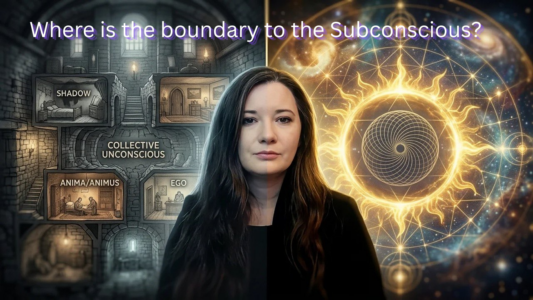











Responses